Why Teams Lose Visibility Across Multiple Projects
Cut project chaos without adding more meetings. Discover how agencies can streamline workflows, improve collaboration, and boost productivity with smarter management
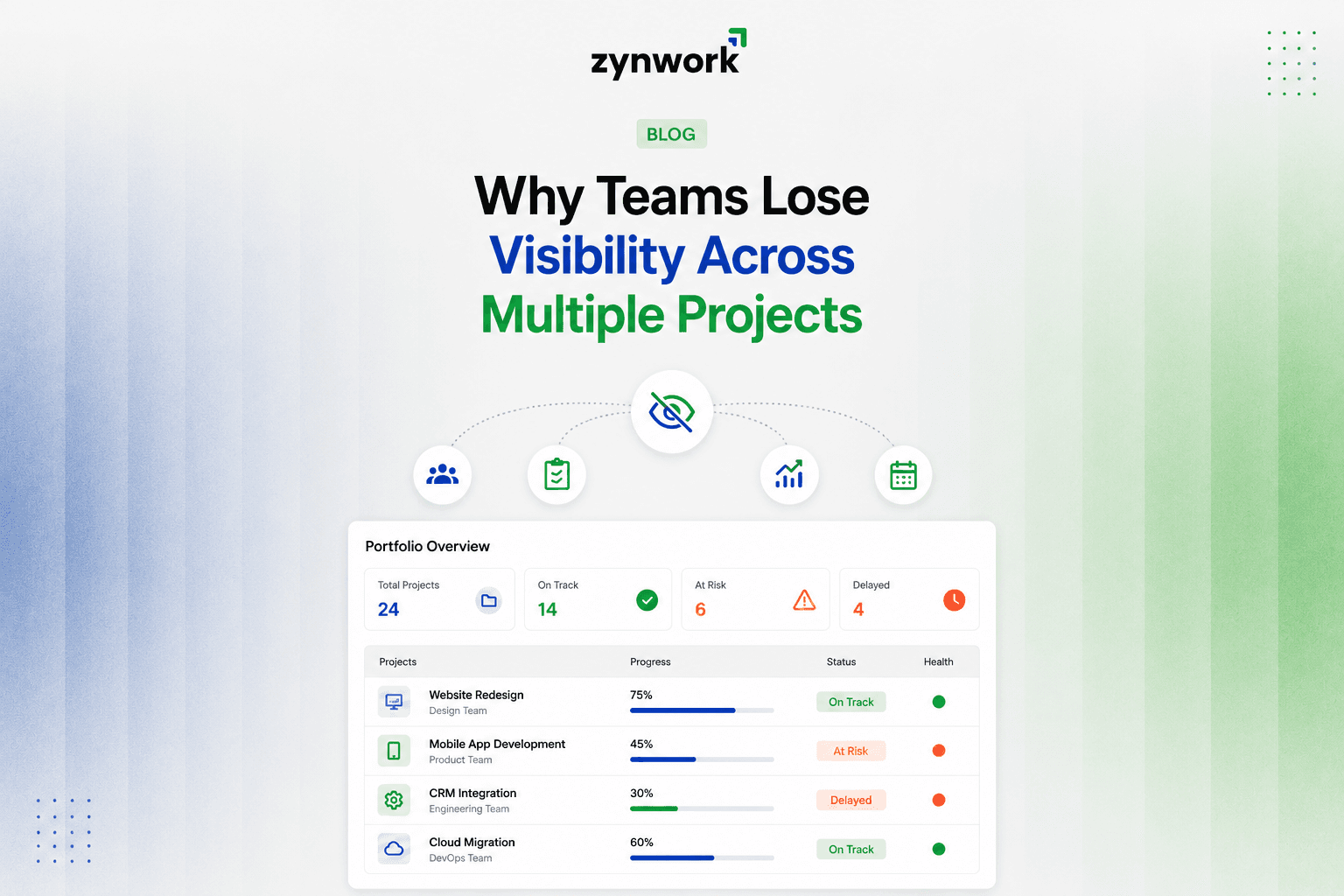
Teams lose visibility across multiple projects when workflows, communication, reporting, and operational data become fragmented across departments, tools, and delivery systems. As organizations manage more projects simultaneously, teams struggle to track priorities, dependencies, workloads, risks, and delivery progress in one centralized view.
Many organizations successfully manage individual projects but lose operational clarity when multiple projects run at the same time.
Without strong multi-project visibility, teams often experience:
delivery delays
resource conflicts
duplicate work
reporting confusion
coordination gaps
operational bottlenecks
Organizations that improve visibility across projects make faster decisions, reduce workflow disruption, and maintain stronger delivery control.
What Is Multi-Project Visibility?
Multi-project visibility is the ability to monitor and manage multiple projects, workflows, resources, risks, and delivery timelines from a centralized operational view.
Teams use connected systems and real-time operational data to track:
project progress
resource allocation
workflow movement
delivery health
cross-project dependencies
operational risks
Strong visibility helps organizations understand how projects affect each other instead of managing each workflow in isolation.
Without centralized visibility, operational complexity increases quickly as projects grow.
Why Teams Struggle to Maintain Visibility Across Projects
Many organizations use disconnected systems to manage workflows across teams and departments.
Teams often work across:
spreadsheets
chat platforms
emails
reporting tools
separate project systems
manual tracking processes
As the number of projects increases, fragmented workflows make operational coordination significantly harder.
A common problem in growing organizations is that each team sees only its own tasks while leadership struggles to understand overall delivery health across projects.
This creates:
reporting inconsistencies
delayed escalations
unclear priorities
dependency conflicts
slower operational decisions
Without centralized operational visibility, organizations lose control over workflow coordination as delivery complexity increases.
Fragmented Workflows Reduce Operational Clarity
Fragmented workflows create major visibility problems across multi-project environments.
When teams manage projects in disconnected systems:
updates become inconsistent
workflow tracking becomes unreliable
delivery risks remain hidden
coordination slows down
reporting becomes fragmented
Important operational information often stays isolated inside departments instead of flowing across the organization.
This makes it difficult for leaders to identify:
stalled workflows
overloaded resources
cross-project dependencies
delivery bottlenecks
operational risks
Organizations with stronger real-time project visibility usually identify workflow issues much earlier.
Cross-Project Dependencies Create Hidden Risks
Modern projects rarely operate independently.
Most organizations manage workflows that depend on:
shared resources
approvals
technical teams
operational handoffs
stakeholder feedback
deployment schedules
One delayed dependency can affect multiple projects at the same time.
For example:
A delayed approval in one project may block development resources needed for another project. Eventually, multiple workflows slow down even though teams continue working actively.
Cross-project dependencies create operational complexity that many organizations underestimate.
Teams that fail to track dependencies across projects often experience recurring delivery disruption.
Resource Conflicts Reduce Delivery Efficiency
Many organizations struggle to balance workloads across multiple projects.
High-performing teams often become overloaded because they support several workflows simultaneously.
Without centralized resource visibility, organizations struggle to understand:
team capacity
workload distribution
delivery priorities
operational bandwidth
This creates:
delivery delays
workflow congestion
burnout risks
operational inefficiencies
Organizations that continuously monitor resource allocation improve operational stability and maintain stronger delivery consistency across projects.
Poor Reporting Structures Create Visibility Gaps
Traditional reporting systems often fail in multi-project environments because teams rely heavily on:
manual updates
spreadsheets
disconnected dashboards
status meetings
delayed reporting cycles
By the time leadership receives updates, workflow problems may already affect delivery timelines.
Many organizations attempt to solve reporting gaps by increasing meetings. In reality, excessive status meetings often indicate operational visibility problems already exist.
Modern delivery environments require continuous operational insight instead of delayed reporting structures.
This is one reason organizations increasingly rely on connected project monitoring systems and centralized operational dashboards.
Why Visibility Matters More in Multi-Project Environments
Managing one project and managing multiple connected projects are completely different operational challenges.
As organizations scale, they must coordinate:
workflows
teams
dependencies
resources
budgets
delivery priorities
without losing operational clarity.
Strong visibility helps organizations:
identify delivery risks earlier
improve operational coordination
reduce workflow disruption
strengthen decision-making
improve forecasting accuracy
Organizations that lack centralized visibility often struggle to maintain delivery consistency as operational complexity increases.
Common Signs Your Team Lacks Multi-Project Visibility
Organizations often recognize visibility problems only after operational inefficiencies become highly visible.
Common warning signs include:
recurring delivery delays
duplicated work across teams
overloaded resources
unclear project priorities
inconsistent reporting
dependency conflicts
delayed escalations
communication gaps
frequent coordination meetings
When leadership struggles to understand overall delivery health across projects, operational visibility usually needs improvement.
These visibility gaps also create larger workflow inefficiencies and project bottlenecks across delivery systems.
How High-Performing Teams Improve Multi-Project Visibility
Centralize Operational Data
High-performing organizations centralize:
project updates
workflows
reporting
operational insights
resource tracking
Centralized systems improve operational awareness and reduce fragmented decision-making.
Improve Real-Time Visibility
Teams that continuously monitor workflows, dependencies, and delivery health identify operational risks much earlier.
Using connected operational systems helps organizations maintain stronger delivery control across projects.
Strengthen Cross-Team Coordination
Organizations improve visibility when teams share:
workflow updates
operational context
delivery priorities
dependency information
Better coordination reduces communication gaps and improves workflow alignment.
Monitor Delivery Metrics Continuously
High-performing teams rely on project delivery metrics to monitor:
workflow efficiency
resource utilization
delivery speed
operational performance
project health
Continuous monitoring improves forecasting and operational decision-making.
Use Connected Workflow Systems
Modern organizations increasingly rely on:
workflow management platforms
project monitoring systems
delivery dashboards
operational analytics tools
connected collaboration systems
to improve multi-project visibility.
As discussed in our guide on task management software for corporates and IT companies, disconnected systems often create operational inefficiencies that reduce delivery coordination.
The Future of Multi-Project Visibility
Organizations increasingly use:
AI-driven operational monitoring
predictive delivery analytics
automated workflow tracking
centralized operational dashboards
real-time delivery intelligence
to improve visibility across complex project environments.
These systems help organizations move from reactive project management toward proactive operational coordination.
As businesses manage more interconnected workflows, centralized visibility will become even more important for maintaining delivery efficiency and operational control.
Conclusion
Managing multiple projects without centralized visibility creates operational complexity that slows delivery performance and reduces workflow coordination.
Organizations that improve visibility across workflows, dependencies, resources, and delivery operations make faster decisions and maintain stronger operational control.
High-performing teams reduce workflow disruption by centralizing operational data, improving coordination, monitoring delivery metrics, and using connected delivery systems.
As project environments continue becoming more complex, multi-project visibility will play a critical role in maintaining delivery efficiency and operational stability.
To better understand how operational visibility improves project performance, explore our guides on real-time project visibility, project delivery metrics, and project bottlenecks.
FAQs
What is multi-project visibility?
Multi-project visibility is the ability to monitor multiple projects, workflows, resources, risks, and delivery timelines from a centralized operational view.
Why do teams lose visibility across projects?
Teams lose visibility because fragmented systems, disconnected workflows, poor reporting structures, and cross-project dependencies reduce operational clarity.
Why is project visibility important?
Project visibility helps organizations improve coordination, identify risks earlier, manage resources better, and maintain stronger delivery performance.
How do teams improve visibility across projects?
Teams improve visibility by centralizing operational data, improving workflow tracking, monitoring delivery metrics, and using connected project systems.
What causes poor operational visibility?
Disconnected systems, fragmented workflows, manual reporting, communication gaps, and inconsistent tracking commonly reduce operational visibility.