How Real-Time Project Visibility Improves Delivery Success
Cut project chaos without adding more meetings. Discover how agencies can streamline workflows, improve collaboration, and boost productivity with smarter management
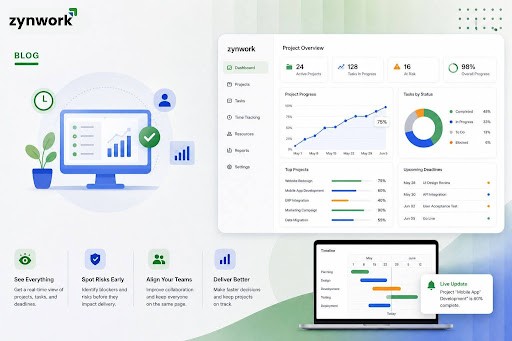
Real-time project visibility improves delivery success by helping teams track progress, identify risks early, manage dependencies, monitor budgets, and make faster operational decisions. Instead of relying on delayed reports or manual updates, organizations can continuously monitor workflows, workloads, blockers, and delivery performance through connected systems and live operational data.
Many projects fail because teams discover problems too late. Delayed approvals, fragmented communication, unclear ownership, and disconnected workflows slowly create operational chaos that affects timelines, budgets, and delivery quality. Real-time visibility helps teams detect these issues earlier and maintain stronger control over project execution and delivery outcomes.
What Is Real-Time Project Visibility?
Real-time project visibility allows organizations to continuously monitor:
project progress
timelines
workloads
budgets
dependencies
delivery risks
operational performance
Teams use connected systems and live data to track delivery health without waiting for weekly reports or manual updates.
Unlike traditional project tracking methods, real-time visibility provides immediate operational insight. Teams can quickly identify stalled workflows, overloaded resources, unresolved blockers, and delivery bottlenecks before they grow into larger problems.
Why Teams Struggle with Project Visibility
Many organizations use multiple disconnected systems to manage projects. Teams often work across spreadsheets, emails, chat platforms, reporting tools, and separate workflow systems that do not communicate effectively with each other.
As projects grow more complex, fragmented workflows reduce operational clarity and create visibility gaps across teams.
Organizations commonly lose visibility because of:
disconnected tools
siloed communication
manual reporting
inconsistent updates
delayed approvals
fragmented workflows
unclear ownership
In fast-moving IT environments, teams often store important information somewhere in the workflow, but decision-makers cannot access it quickly when they need it most.
Why Real-Time Visibility Improves Project Delivery
Teams make better operational decisions when they can clearly see project health, workflow movement, resource capacity, and delivery risks in real time.
Without visibility, organizations often miss:
stalled tasks
unresolved dependencies
resource conflicts
budget overruns
workflow bottlenecks
delivery delays
Most projects do not fail suddenly. Small operational issues build gradually until teams can no longer manage them effectively.
Real-time visibility allows teams to identify risks earlier, respond faster, and improve delivery consistency across projects.
This proactive approach plays a major role in effective project delivery management because teams can solve operational problems before they affect final outcomes.
How Real-Time Visibility Improves Operational Decision-Making
Strong visibility improves decision-making across every stage of project delivery.
Teams can:
rebalance workloads faster
escalate blockers earlier
adjust priorities proactively
improve resource allocation
manage dependencies more efficiently
respond to delivery risks immediately
High-performing organizations avoid large operational disruptions because they continuously make smaller adjustments throughout the project lifecycle.
Instead of waiting for weekly reporting cycles, teams use live operational data to maintain delivery control in real time.
Key Areas Teams Need Real-Time Visibility Into
Task & Workflow Progress
Teams need visibility into:
active workflows
stalled tasks
delivery progress
project dependencies
workflow movement
Without workflow visibility, projects may appear productive while important deliverables remain blocked behind unresolved dependencies.
Budget & Financial Tracking
Organizations need real-time insight into:
project spending
budget utilization
delivery costs
financial risks
cost overruns
Without financial visibility, teams often discover budget problems too late to make effective operational corrections.
Resource Allocation
Poor visibility into workloads creates:
team burnout
uneven task distribution
delivery delays
reduced operational efficiency
Real-time visibility helps organizations distribute workloads more effectively and improve team sustainability.
Delivery Risks & Blockers
One unresolved blocker can delay multiple workflows across a project.
Teams need continuous visibility into:
approval delays
unresolved dependencies
delivery bottlenecks
escalation risks
operational blockers
Early visibility allows teams to resolve problems before they spread across departments and affect delivery timelines.
Cross-Team Coordination
Modern projects depend heavily on cross-functional collaboration.
Without centralized visibility:
communication becomes fragmented
accountability becomes unclear
reporting becomes inconsistent
coordination slows down
Real-time visibility helps teams align workflows, centralize updates, and improve operational coordination across departments.
Real-Time Visibility vs Traditional Project Tracking
Traditional Project Tracking | Real-Time Project Visibility |
Static reports | Continuous operational insights |
Delayed updates | Live monitoring |
Reactive management | Proactive delivery control |
Fragmented systems | Connected workflows |
Limited delivery context | Full operational visibility |
Traditional reporting systems often show problems after they already affect delivery performance.
Real-time visibility helps organizations respond faster and maintain continuous operational awareness throughout the project lifecycle.
How High-Performing Teams Use Visibility Differently
High-performing teams do not rely entirely on status meetings or delayed reporting cycles to understand delivery performance.
Instead, they continuously monitor:
project health
workflow movement
team capacity
dependencies
operational risks
delivery progress
Using connected systems and project delivery metrics, these organizations improve forecasting, strengthen coordination, and reduce operational uncertainty.
The difference between average teams and mature delivery organizations often comes down to visibility not effort.
Common Signs Your Team Lacks Visibility
Organizations often recognize visibility problems only after delivery performance starts declining.
Common warning signs include:
constant status meetings
repeated requests for updates
delayed decision-making
unexpected delivery delays
duplicate work across teams
unclear ownership
outdated reporting systems
inconsistent workflow tracking
When teams spend more time explaining project status than improving project delivery, visibility systems usually need improvement.
These operational gaps also create larger alignment problems between project execution vs delivery.
Tools That Improve Project Visibility
Modern organizations use:
centralized project systems
workflow management platforms
delivery dashboards
operational analytics tools
project monitoring systems
connected collaboration tools
to improve visibility and reduce workflow fragmentation.
As discussed in our guide on task management software for corporates and IT companies, disconnected systems often create additional operational complexity instead of improving delivery coordination.
Strong visibility systems help organizations:
centralize project information
reduce reporting delays
improve collaboration
monitor delivery continuously
strengthen operational control
The Future of Project Visibility
Organizations increasingly rely on intelligent operational systems to improve project delivery.
Modern delivery environments now use:
predictive delivery monitoring
AI-driven operational insights
automated risk detection
real-time delivery intelligence
connected operational ecosystems
These systems help teams move beyond reactive reporting and create more proactive delivery operations.
As project complexity continues increasing, organizations will depend even more on real-time visibility to maintain operational efficiency and delivery consistency.
Conclusion
Real-time project visibility helps organizations improve operational control, reduce delivery risks, and strengthen project outcomes.
Teams that continuously monitor workflows, budgets, dependencies, risks, and resource allocation make faster decisions and respond to operational challenges more effectively.
Organizations that prioritize visibility create stronger delivery systems, improve coordination across teams, and maintain better control over project performance.
To understand how visibility connects with delivery performance, explore our guides on project delivery management and project delivery metrics.
FAQs
What is real-time project visibility?
Real-time project visibility allows organizations to continuously monitor project progress, workflows, risks, budgets, and operational performance through live connected systems.
Why is project visibility important?
Project visibility helps teams identify risks early, improve coordination, reduce delays, and make faster operational decisions.
What causes poor project visibility?
Disconnected tools, fragmented workflows, siloed communication, delayed reporting, and inconsistent updates commonly reduce project visibility.
How do teams improve project visibility?
Teams improve visibility by using centralized systems, connected workflows, delivery dashboards, and real-time project tracking platforms.
How does visibility improve project delivery?
Visibility improves project delivery by helping teams identify bottlenecks earlier, manage dependencies better, improve coordination, and reduce operational delays.