How to Make a Project Report: The Smarter Way IT Teams Deliver Results Without Spreadsheet Chaos
Cut project chaos without adding more meetings. Discover how agencies can streamline workflows, improve collaboration, and boost productivity with smarter management
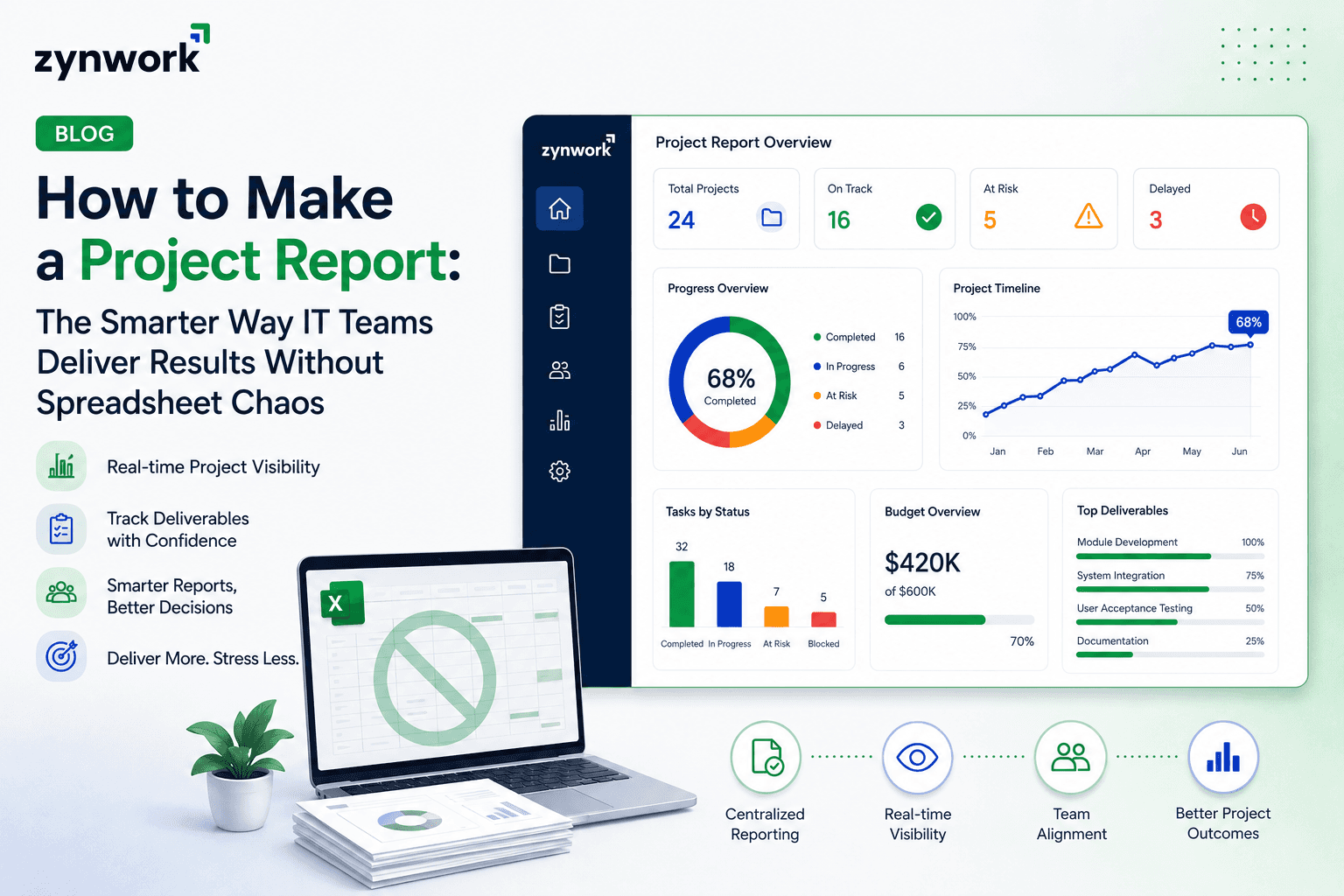
Most IT teams have faced this situation at least once.
A project update meeting starts, someone opens a spreadsheet, another person shares outdated numbers, a manager asks for delivery status, and suddenly nobody is fully sure which report is actually correct.
The real problem is not a lack of effort. The real problem is disconnected reporting systems.
Modern software teams manage multiple workflows, sprint cycles, budgets, approvals, deliverables, and operational dependencies at the same time. When reporting stays scattered across spreadsheets, emails, chat tools, and manual trackers, delivery visibility becomes difficult to maintain.
That is why learning how to make project report systems smarter has become extremely important for modern IT teams.
Project reporting today is no longer just about creating weekly documents. It is about improving operational clarity, workflow visibility, and delivery coordination across the organization.
Platforms like Zynwork help teams centralize project visibility, delivery tracking, operational analytics, sprint coordination, and reporting workflows in one connected system.
In this guide, you will learn:
why traditional project reporting creates problems
what makes a modern project report effective
how IT teams improve delivery visibility
why centralized reporting matters
how organizations reduce spreadsheet chaos
Why Spreadsheet-Based Reporting Slows IT Teams Down
Many organizations still depend heavily on:
spreadsheets
manual reporting
disconnected dashboards
email updates
status meetings
to manage software delivery reporting.
At first, these systems appear manageable.
But as projects become larger and more complex, reporting quickly turns into an operational bottleneck.
Teams spend valuable time:
updating spreadsheets
consolidating reports
chasing status updates
fixing reporting inconsistencies
verifying delivery information
instead of focusing on actual project execution.
One spreadsheet may show completed tasks while another dashboard still displays outdated progress. Leadership teams often receive fragmented updates from multiple departments, making operational decisions harder.
This directly affects overall project management delivery efficiency across teams.
Modern software delivery environments move too quickly for delayed or fragmented reporting systems.
Organizations need connected operational visibility instead of static reporting documents.
What Is a Project Report?
A project report is a structured reporting system that helps organizations track:
workflow progress
sprint performance
project timelines
operational risks
delivery health
budgets
project outcomes
The purpose of project reporting is simple:
to help teams maintain operational visibility throughout the delivery lifecycle.
Strong reporting systems help organizations:
improve coordination
identify blockers earlier
improve decision-making
strengthen workflow visibility
improve stakeholder communication
Modern project reports are no longer static documents created once every week.
Today, high-performing organizations rely on continuous operational reporting powered by centralized dashboards and connected delivery systems.
Why Modern IT Teams Need Smarter Reporting Systems
Software projects in 2026 are significantly more complex than traditional delivery environments.
Modern IT teams manage:
agile sprint cycles
distributed teams
cloud-based systems
continuous deployments
operational dependencies
multiple stakeholders
changing delivery priorities
Managing all these moving parts through spreadsheets alone creates operational confusion.
Many organizations still collect large amounts of data but struggle to gain real visibility because workflows remain disconnected across systems.
This is where a modern delivery management system project approach becomes important.
Connected reporting systems help organizations centralize:
operational visibility
delivery tracking
workflow coordination
resource planning
sprint monitoring
This improves delivery consistency and reduces operational blind spots.
Key Elements Every Effective Project Report Should Include
Strong project reporting focuses on clarity, visibility, and operational alignment.
A good report should help leadership quickly understand project health without reading through unnecessary details.
Here are the most important sections every modern IT project report should include.
1. Project Overview
Every report should begin with a clear project summary.
This section usually includes:
project objectives
current delivery stage
milestone progress
timeline overview
operational priorities
Leadership teams should immediately understand overall delivery status from this section.
2. Workflow Progress Tracking
Modern project reports should clearly track workflow movement across teams.
This includes:
completed tasks
active workflows
sprint updates
blocked activities
dependency status
approval progress
Clear workflow visibility helps organizations improve coordination across departments.
This becomes especially important in agile environments where sprint execution changes rapidly.
3. Budget and Resource Visibility
Financial visibility is now a critical part of modern project reporting.
Teams should monitor:
project budgets
operational spending
resource utilization
delivery costs
Organizations using connected financial intelligence systems improve forecasting and operational planning more effectively.
Strong financial reporting also helps teams identify risks before costs become difficult to control.
4. Risks and Operational Blockers
Every project report should identify operational risks early.
Common reporting areas include:
workflow delays
technical blockers
dependency conflicts
resource shortages
sprint bottlenecks
delivery risks
Early visibility helps teams respond faster and maintain stronger delivery control.
This is one reason modern operational dashboards have become essential for software delivery teams.
5. Performance Metrics
High-performing teams continuously monitor operational performance.
Modern reports often include:
sprint velocity
delivery speed
resource performance
project health indicators
Connected analytics dashboards improve visibility significantly compared to manual reporting systems.
Why Deliverables Matter in Modern Project Reporting
Tracking deliverables in project management is one of the most important parts of operational reporting.
Deliverables represent the actual outputs teams need to complete during the project lifecycle.
Without clear deliverable visibility, organizations struggle to understand:
workflow completion
delivery progress
ownership accountability
operational dependencies
stakeholder expectations
Many software delivery problems happen because teams lose visibility into deliverable status across workflows.
Modern IT teams increasingly rely on centralized deliverable tracking systems to improve operational coordination and accountability.
Strong deliverable visibility also improves communication between technical teams, leadership, and stakeholders.
How to Make Better Project Reports Without Spreadsheet Chaos
Learning how to make project report systems more efficient starts with improving operational visibility instead of adding more spreadsheets.
Modern IT organizations should focus on:
centralized reporting
automated updates
connected dashboards
workflow intelligence
delivery analytics
operational coordination
instead of fragmented manual reporting.
Here are some practical ways teams improve project reporting.
Centralize Operational Data
Disconnected systems create fragmented visibility.
Teams should centralize:
sprint updates
workflow tracking
delivery analytics
financial reporting
resource planning
operational metrics
Centralized visibility helps organizations reduce reporting confusion and improve decision-making.
This is one reason connected project intelligence systems are becoming more important for software delivery teams.
Use Real-Time Reporting
Static reports become outdated quickly.
Real-time operational visibility helps leadership monitor:
delivery health
sprint progress
workflow movement
operational risks
team performance
without waiting for manual reporting cycles.
Organizations with strong real-time reporting identify operational issues earlier and improve delivery coordination significantly.
Improve Cross-Team Visibility
Project reporting should improve collaboration instead of isolating departments.
Development, QA, operations, finance, and leadership teams should all share operational visibility across workflows.
Better visibility improves overall project management delivery performance across projects.
Cross-functional reporting also reduces communication gaps and operational delays.
Automate Reporting Processes
Manual reporting consumes large amounts of operational time.
Automation helps teams:
reduce repetitive work
improve reporting consistency
improve workflow coordination
increase operational visibility
reduce reporting errors
Many modern project intelligence platforms now automate reporting workflows using centralized dashboards and operational analytics systems.
Common Reporting Mistakes IT Teams Should Avoid
Even experienced teams often struggle with reporting inefficiencies.
Here are some common mistakes organizations should avoid.
Overcomplicated Reports
Many teams overload reports with:
excessive metrics
unnecessary technical details
duplicate updates
fragmented data
Good reporting should improve clarity, not create confusion.
Simple reporting structures improve operational understanding significantly.
Delayed Reporting Updates
Weekly reporting cycles often reduce visibility.
Modern delivery environments require continuous operational insight instead of delayed updates.
Real-time reporting improves operational responsiveness and delivery control.
Lack of Visibility Across Departments
Disconnected reporting environments create operational silos.
Organizations should improve workflow visibility across:
development
operations
finance
leadership
QA teams
This strengthens project coordination across the organization.
Focusing Only on Tasks Instead of Delivery Outcomes
Modern reporting should focus on:
operational performance
workflow efficiency
delivery consistency
sprint health
project risks
instead of simply listing completed tasks.
Organizations that focus only on task tracking often miss larger delivery problems.
Why Delivery Visibility Matters More Than Ever
Modern software delivery environments involve:
distributed workflows
agile sprint execution
operational dependencies
continuous delivery cycles
cross-functional collaboration
Without strong operational visibility, teams struggle to maintain delivery consistency.
This is why many organizations now adopt a connected delivery management system project approach instead of relying entirely on spreadsheets.
Connected reporting systems improve:
operational forecasting
workflow coordination
sprint visibility
delivery consistency
reporting accuracy
As projects become more interconnected, centralized visibility becomes even more important.
The Future of Project Reporting
Project reporting continues evolving rapidly.
Organizations increasingly use:
AI-driven analytics
predictive reporting
operational intelligence systems
workflow analytics
automated dashboards
centralized delivery tracking
to improve software delivery visibility.
Modern reporting systems now focus heavily on:
operational coordination
workflow intelligence
delivery analytics
performance monitoring
strategic forecasting
instead of static reporting documents alone.
This shift helps organizations improve scalability, visibility, and operational efficiency.
Best Practices for Smarter Project Reporting
High-performing IT teams follow several operational best practices to improve reporting efficiency.
Keep Reporting Simple
Clear reporting structures improve readability and decision-making.
Improve Deliverable Visibility
Tracking deliverables in project management improves operational accountability and workflow coordination significantly.
Focus on Operational Visibility
Teams should prioritize:
workflow tracking
sprint visibility
delivery coordination
operational reporting
resource visibility
instead of fragmented updates.
Use Connected Reporting Systems
Connected dashboards improve visibility far more effectively than spreadsheet-heavy workflows.
Continuously Optimize Reporting Workflows
Successful organizations continuously improve reporting systems as project complexity increases.
Conclusion
Modern IT teams need more than spreadsheets to manage software delivery efficiently.
Organizations that improve operational visibility strengthen workflow coordination, sprint execution, reporting accuracy, and delivery consistency across projects.
Learning how to make project report systems smarter helps teams reduce reporting chaos while improving operational decision-making significantly.
Today, successful project management delivery depends heavily on connected reporting systems, centralized visibility, and stronger operational coordination.
As software projects become more complex, organizations using intelligent dashboards, workflow analytics, and connected operational systems will maintain a major delivery advantage.
If your organization wants stronger reporting visibility, smarter operational coordination, connected workflow tracking, and centralized delivery intelligence, Zynwork helps modern IT teams manage project reporting with greater clarity, efficiency, and control.