Project Delivery Metrics That Actually Matter
Cut project chaos without adding more meetings. Discover how agencies can streamline workflows, improve collaboration, and boost productivity with smarter management
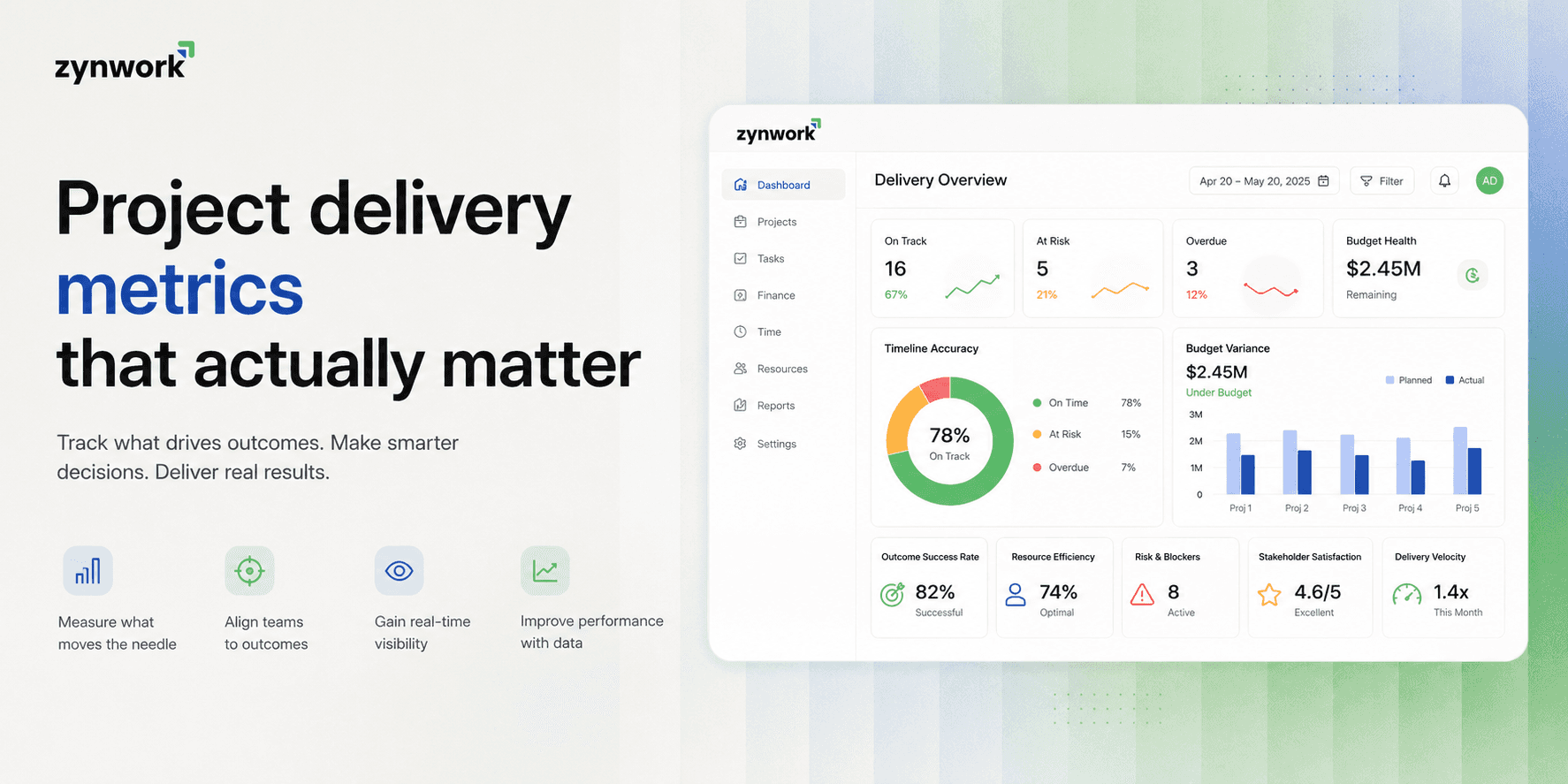
Most teams track dozens of project metrics. Tasks completed. Hours logged. Tickets closed. Team activity. Timeline updates. On paper, everything looks productive.
Yet projects still miss deadlines, go over budget, or fail to deliver meaningful outcomes. As explained in our guide on why projects fail even when tasks are completed, activity alone is not a reliable measure of success.
The problem is not lack of data.
Teams don’t struggle because they lack metrics.
They struggle because they measure the wrong things.
This is where project delivery metrics become critical. Instead of measuring activity alone, they measure whether a project is actually progressing toward successful outcomes.
Quick Answer: Project Delivery Metrics
Project delivery metrics measure whether a project is progressing toward successful outcomes, efficient execution, and business goals.
They help teams evaluate:
delivery health
project performance
financial efficiency
timeline accuracy
overall business impact
Unlike traditional project metrics, delivery metrics focus on results not just activity.
What Are Project Delivery Metrics?
Project delivery metrics are measurements used to evaluate whether a project is delivering value, meeting objectives, and progressing successfully.
They provide visibility into:
project health
delivery efficiency
risks and blockers
outcome achievement
This allows teams to move beyond simple task tracking and make better delivery decisions.
Project Metrics vs Delivery Metrics
Many teams confuse operational tracking with delivery measurement.
Here’s the difference:
Traditional Project Metrics | Project Delivery Metrics |
Tasks completed | Outcomes achieved |
Hours worked | Value delivered |
Team activity | Delivery performance |
Ticket closure rate | Goal completion |
Workflow status | Project health |
This reflects the broader gap between project execution vs delivery.
Execution measures activity.
Delivery measures impact.
Why Most Teams Track the Wrong Metrics
1. Activity Is Easier to Measure
Tracking tasks and hours is simple.
Measuring delivery success requires deeper visibility into:
outcomes
dependencies
delivery risks
business alignment
2. Metrics Are Disconnected from Business Goals
Many dashboards focus heavily on operational data while ignoring whether the project is actually creating value.
As a result, teams may appear productive while delivery performance declines.
3. Reporting Becomes More Important Than Insight
Some organizations collect large amounts of data without turning it into actionable decisions.
Metrics should improve visibility not create noise.
What Are the Most Important Project Delivery Metrics?
1. Timeline Accuracy
Timeline accuracy measures how closely actual delivery aligns with planned schedules.
This helps teams evaluate:
delivery predictability
planning efficiency
delay patterns
Consistent delays usually indicate deeper visibility or dependency problems.
2. Budget Variance
Budget variance compares estimated project costs with actual spending.
Tracking this metric helps teams:
identify overspending early
improve forecasting
reduce financial risk
Projects that consistently exceed budgets often suffer from weak visibility or poor delivery coordination.
3. Outcome Success Rate
A project should not be considered successful simply because work was completed.
Outcome success rate measures whether the intended business objective was achieved.
This is one of the most important delivery-focused metrics because it directly connects execution to results.
4. Resource Efficiency
Resource efficiency evaluates how effectively teams use time, capacity, and effort.
It helps answer questions like:
Are teams overloaded?
Are resources distributed properly?
Is productivity sustainable?
Poor resource allocation often leads to delays, inefficiency, and burnout.
5. Risk & Blocker Visibility
High-performing teams identify risks before they become major delivery issues.
Tracking:
blockers
bottlenecks
unresolved dependencies
stalled workflows
helps improve decision-making and delivery stability.
This is where real-time project visibility becomes essential for proactive project management.
6. Stakeholder Satisfaction
Project success is ultimately defined by the people receiving the outcome.
Stakeholder satisfaction helps teams measure:
expectation alignment
communication effectiveness
delivery quality
A project delivered on time but rejected by stakeholders is still a failed delivery.
7. Delivery Velocity
Delivery velocity measures how consistently teams move projects forward without sacrificing quality.
Unlike raw speed metrics, delivery velocity focuses on:
sustainable execution
predictable progress
long-term delivery consistency
How High-Performing Teams Use Metrics Differently
Strong teams do not use metrics only for reporting.
They use metrics to:
improve visibility
identify risks early
guide decisions
align work with outcomes
Using project performance analytics, teams monitor delivery health continuously instead of waiting for problems to appear late in the project lifecycle.
This delivery-focused mindset is a core part of effective project delivery management.
Common Mistakes Teams Make with Project Metrics
Tracking Too Many KPIs
Too many metrics create confusion instead of clarity.
High-performing teams focus only on metrics directly connected to delivery outcomes.
Measuring Activity Instead of Results
Completing work does not always mean delivering value.
This is one of the main reasons projects appear successful during execution but fail later.
Using Disconnected Systems
When data is spread across multiple tools, visibility becomes fragmented.
As discussed in task management software for corporates and IT companies, disconnected systems make delivery tracking harder and reduce operational clarity.
Ignoring Early Warning Signals
Small blockers often become larger delivery problems when ignored.
Strong delivery systems prioritize visibility and proactive action.
Tools & Systems for Tracking Delivery Metrics
Modern project teams rely on:
real-time dashboards
integrated reporting
delivery analytics
visibility systems
to improve project tracking and decision-making.
However, tools alone are not enough.
High-performing teams use connected systems instead of isolated dashboards. Real-time visibility across budgets, timelines, and dependencies improves delivery decisions significantly.
Without delivery-focused processes, even advanced systems fail to improve outcomes.
The Future of Project Delivery Analytics
Project delivery is becoming increasingly intelligent and data-driven.
Organizations are beginning to adopt:
predictive analytics
AI-powered reporting
automated risk detection
real-time delivery insights
These capabilities help teams move from reactive management to proactive delivery optimization.
FAQs
What are project delivery metrics?
Project delivery metrics measure whether a project is progressing toward successful outcomes, not just task completion.
Which project metrics matter most?
Timeline accuracy, budget variance, stakeholder satisfaction, resource efficiency, and outcome success rate are among the most important metrics.
What is the difference between project metrics and delivery metrics?
Traditional project metrics focus on activity, while delivery metrics focus on outcomes and business impact.
Why are delivery metrics important?
They help teams improve visibility, identify risks early, and ensure projects deliver meaningful business results.
How do you measure project delivery performance?
Project delivery performance is measured using metrics such as timeline accuracy, delivery velocity, outcome success rate, budget variance, and stakeholder satisfaction.
Conclusion
The best project teams do not succeed because they track more data.
They succeed because they track the right data.
Project delivery metrics provide visibility into what truly matters:
outcomes
delivery health
efficiency
business impact
Teams that focus only on activity often struggle with delays, budget overruns, and ineffective results.
But teams that measure delivery performance gain the clarity needed to improve decision-making, reduce risk, and achieve better outcomes.
To understand the broader foundation behind these metrics, explore our complete guide on project delivery management and learn how project execution vs delivery impacts long-term project success.